You’re Not Lazy. You’re Burned Out, Numb, and Overwhelmed
Signs of Burnout You Might Be Missing (Even If You Seem Fine)
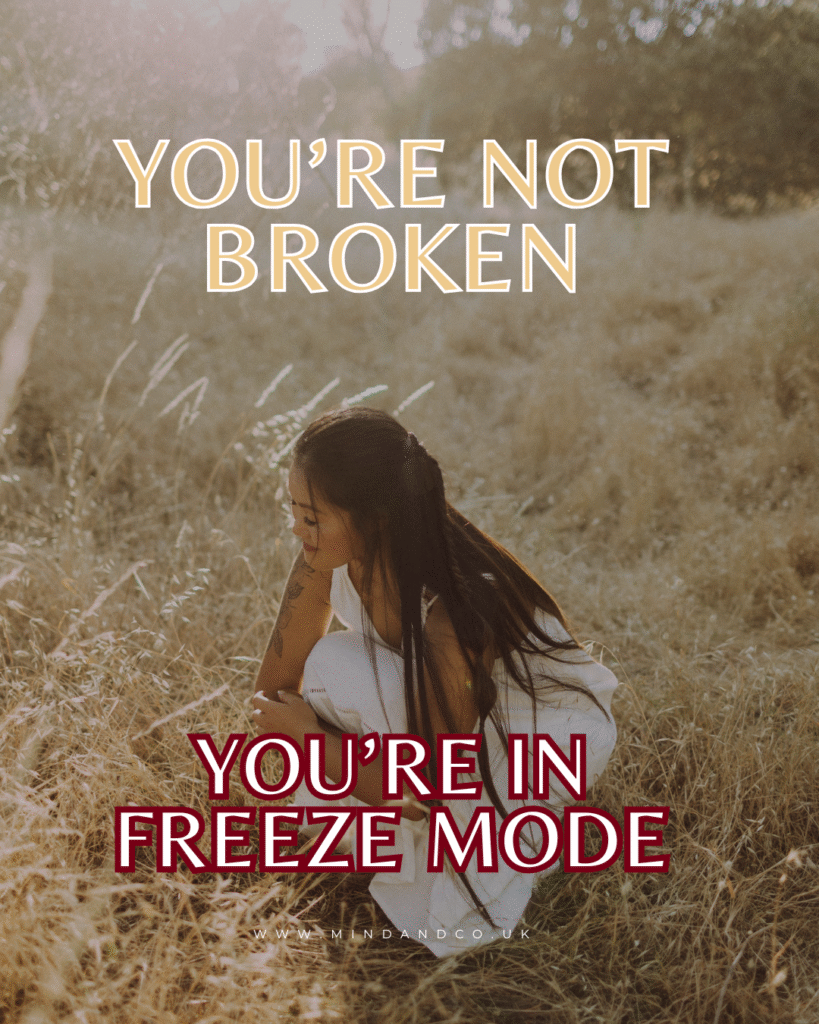
Let’s get one thing straight: You’re not lazy. You’re not broken. You’re not dramatic.
You’re burnt out. And your body knows it – even if your brain is still shouting, “push through.”
What Burnout Actually Feels Like (Beyond Just Being Tired)
Burnout isn’t just exhaustion. It’s emotional depletion, brain fog, disconnection from your own needs, and a creeping sense that everything is too much… but also somehow not enough.
The World Health Organisation defines burnout as a “syndrome resulting from chronic workplace stress that has not been successfully managed” (WHO, 2019). But therapists know burnout goes far beyond work. It affects identity, connection, and your very sense of self.
People who are burnt out often say things like:
- “I’m always tired, but can’t sleep.”
- “I’m doing the bare minimum to survive, and I hate that.”
- “I feel numb. Or angry. Or both.”
Burnout can look like depression, act like anxiety, and feel like failure. But it’s not a personal flaw. It’s your nervous system doing its best to keep you afloat.
The Myth of Laziness: What’s Really Going On
Let’s bin the idea of laziness.
If you’re constantly feeling “lazy,” what’s more likely is that your nervous system is stuck in freeze mode – a survival response well-documented in Polyvagal Theory (Porges, 2022). After prolonged stress, your system may no longer fight or flee—it shuts down to conserve energy.
This isn’t a conscious decision. It’s biology.
You might recognise it as:
- Struggling to get started on anything, even things you want to do.
- Zoning out mid-conversation or mid-task.
- Feeling emotionally “flat” but physically wired.
This is not laziness. It’s nervous system dysregulation. And your body is protecting you the only way it knows how.
Emotional Numbness Isn’t Emptiness – It’s Protection
In person-centred therapy, we understand numbness as a protective adaptation, not a sign of disconnection or failure. You’re not detached – you’re defended.
Studies have shown that people experiencing trauma or chronic stress often exhibit signs of tonic immobility – a freeze response similar to animals playing dead when escape isn’t possible (Föcker et al., 2020; Terpou et al., 2022). You’re not absent. You’re shielded.
That flatness? That “can’t be arsed” energy? It’s not that you don’t care. It’s that caring feels like a luxury you can’t afford in survival mode.
Freeze Mode vs Rest Mode
Let’s distinguish freeze from rest—because they’re often mistaken for the same thing.
- Rest mode feels nourishing. You can reflect. You breathe easily. You’re aware of your needs.
- Freeze mode feels like staring into space with your shoulders up to your ears and a sense of dread in your chest.
One is restoration. The other is shutdown
So… How Do You Come Back to Life?
Coming out of burnout doesn’t require a full lifestyle overhaul. It requires safety, expression, and slowness.
Here’s what’s supported by evidence:
| Practice | Why It Helps |
| Creative expression(drawing, movement, writing) | Art therapy and dance movement therapy are shown to improve mood, reduce stress, and support emotional processing (Koch et al., 2019; Young et al., 2018). |
| Expressive arts therapy | Person-centred expressive therapy creates space for authentic, embodied expression – especially for those who struggle with traditional talk therapy (Alsaadi et al., 2024). |
| Co-regulation in therapy | Person-centred therapy builds emotional safety through empathy, congruence, and unconditional positive regard—conditions that support nervous system regulation (StatPearls, 2023). |
You don’t need to force yourself into 5am workouts or bullet journals. You need to gently reconnect to the parts of you that have gone silent.
That could be:
- Scribbling on a page until something moves
- Moving your body to music without a plan
- Crying in the bath to a sad playlist
- Speaking aloud the things you never admit to anyone
Small acts of expression are how we reclaim our humanity.
When to Seek Support
If any part of this landed in your gut, that low-key hum of “this is me” – you don’t need to wait for a full collapse to seek help.
Therapy can help you:
- Understand your body’s signals
- Express what’s been buried
- Reconnect to your voice – not the one shaped by burnout, trauma, or perfectionism
You’re allowed to need care even when you “seem fine.”
💌 Want More Like This?
Join the MIND&Co. newsletter for bold, grounded, no-fluff support to help you feel more alive – not just more “productive.”
Or book a session if you’re ready to stop managing and start expressing.
📚 References
- Alsaadi, J., et al. (2024). Person-Centred Expressive Arts Therapy in Clinical Settings: A Systematic Review.
- Föcker, J., et al. (2020). Freezing in Response to Social Threat: A Replication Study.
- Koch, S. C., et al. (2019). Effects of Dance Movement Therapy and Arts Therapies on Psychological Health: A Meta-Analysis.
- Porges, S. W. (2022). The Pocket Guide to the Polyvagal Theory.
- StatPearls. (2023). Person-Centered Therapy.
- Terpou, B. A., et al. (2022). The Brain–Body Disconnect: Somatic Basis for Trauma-related Freeze.
- WHO. (2019). Burn-out an Occupational Phenomenon: International Classification of Diseases.
- Young, E. M., et al. (2018). Therapeutic Effectiveness of Visual Art Modalities: A Systematic Review.